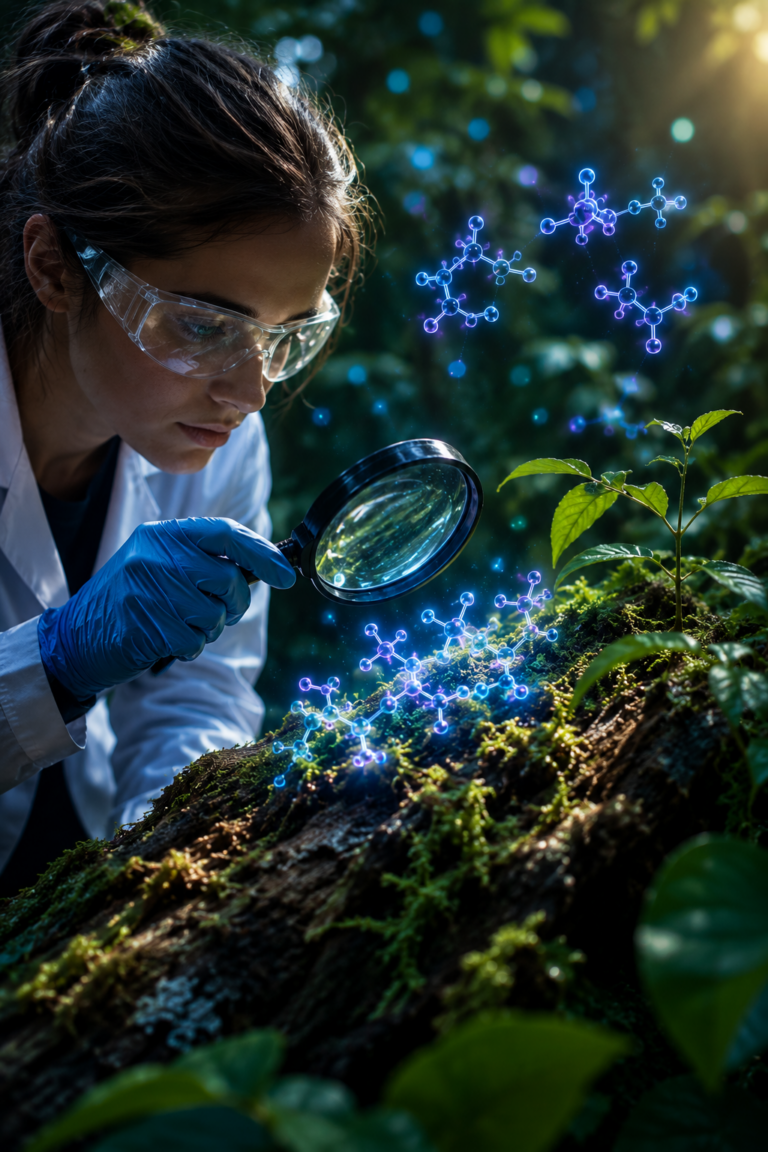
How Are Peptides Built?
Peptides are small, but the way they’re built creates an incredible amount of variety. It all starts with amino acids — and how those tiny building blocks come together.
It All Starts With Amino Acids
Think of amino acids as the individual pieces used to build a peptide.
When amino acids connect, they form what’s known as a peptide bond. Add more amino acids, and the chain continues to grow.
But this isn’t a case of simply connecting random pieces and seeing what happens. The amino acids included in the chain — and the exact order they appear in — help determine what makes each peptide unique.
That’s where things start getting interesting.
Same Pieces, Completely Different Results
Imagine having a box of letter tiles. Using the same letters, you can rearrange them to create completely different words. The pieces haven’t changed, but their order has — and suddenly they mean something entirely different. Peptides work in a similar way.
The specific order of amino acids in a peptide is called its amino acid sequence. Change that sequence, and you may change the characteristics of the peptide along with it. This is one reason peptide science is such a large area of research. A seemingly small difference can create something new to identify, compare, and study.
So, How Big Is a Peptide?
There’s no single answer. Some peptides are made from relatively short chains of amino acids, while others are much longer and more complex. As those chains grow, things get even more interesting. A peptide doesn’t necessarily stay in one long, straight line. It can bend, twist, and fold into a particular shape. And yes — that shape matters too.
Researchers look at the length of a peptide, its amino acid sequence, and its structure to learn more about what makes it different from other peptides. It’s a little like a scientific fingerprint.
What About Research Peptides?
Many peptides occur naturally in the human body, plants, animals, and other living organisms. But researchers also need ways to study specific peptides in controlled laboratory settings. That’s where peptide synthesis comes in.
In simple terms, peptide synthesis is the process of building a peptide by connecting amino acids in a planned sequence. Of course, the actual science is more complicated than snapping together a set of building blocks. Creating a peptide can involve multiple steps, specialized equipment, purification, and testing. But the basic goal is surprisingly straightforward: build the right chain in the right order.
From Building to Testing
Creating the peptide is only part of the process. Once a peptide has been produced, researchers need information about what they actually have. Is it the intended peptide? How pure is the sample? Were other substances detected during testing? This is where peptide testing and documentation become important.
You may see terms like identity, purity, and Certificate of Analysis (COA) when learning about research peptides. These details provide more information about the peptide sample and the testing performed on it.
We’ll get much deeper into all of that elsewhere in the PKC Knowledge Center. For now, the important thing to know is that building a peptide and evaluating the finished sample are two different parts of the process.
Why Does Peptide Structure Matter So Much?
Here’s where all the pieces come together. A peptide isn’t defined by its name alone. Its amino acids, sequence, length, and structure all help make it what it is. That’s why two peptides can both be built from amino acids but still be very different from one another.
It’s also why learning the basics of peptide structure makes the rest of peptide science easier to follow. Once you know what peptides are made from, peptide names, types, testing, and research areas start to feel a lot less random.
Small Building Blocks, A Lot to Explore
Peptides begin with a surprisingly simple concept: amino acids connected together. But from those small building blocks comes an enormous amount of variety.
Different sequences. Different lengths. Different structures. Different areas of research.
And that leads us to another interesting question: if peptides can be found throughout nature and created for research, where exactly do they come from?