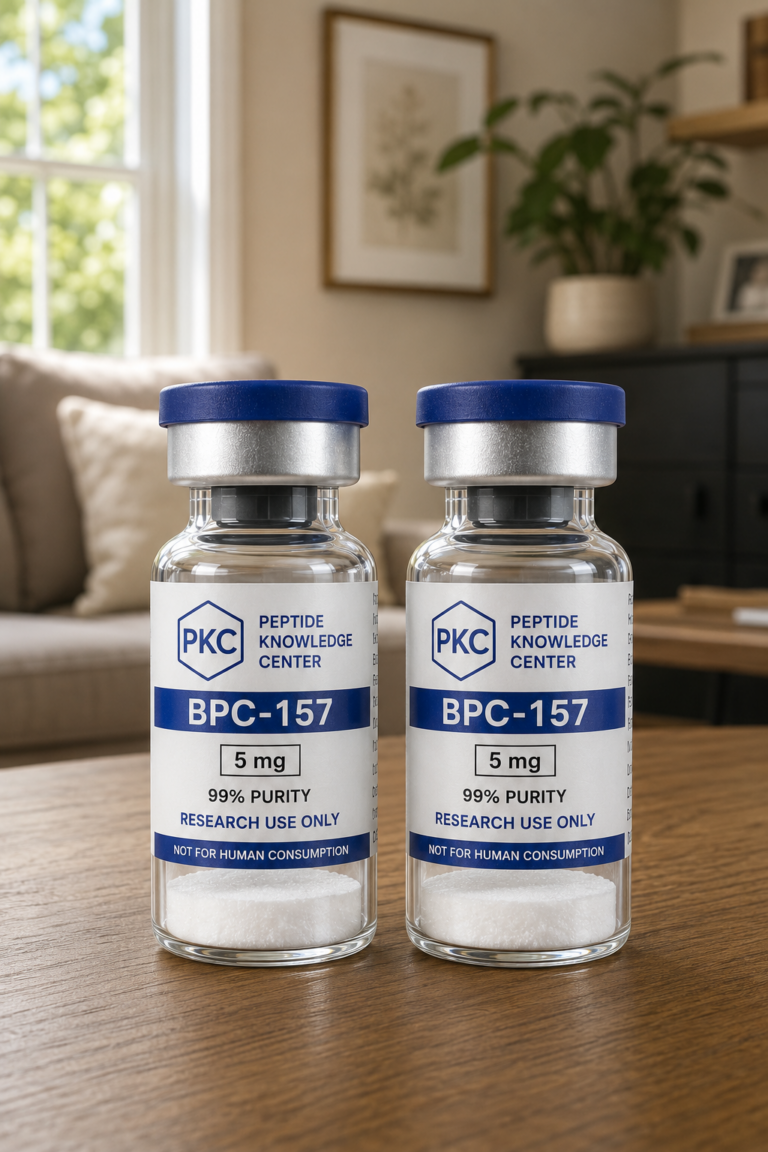
Every Peptide is different
Peptides are made from amino acids arranged in a specific order. That unique arrangement is one of the things researchers use to tell peptides apart.
Appearance isn’t enough
Many research peptides look very similar, especially in powder form. You can’t simply look at a vial and know whether it contains the peptide listed on the label.
Testing provides answers
Specialized testing gives researchers information they can compare with what they already know about a peptide to help confirm its identity.
Think of It Like a Fingerprint
A name tag can tell you who someone is supposed to be, but it doesn’t confirm their identity. Research peptides work in a similar way. Testing looks for characteristics that help determine whether what’s in the vial matches what should be there.
The Name Is Only the Beginning
A professional label and sealed vial may look reassuring, but they don’t confirm what’s inside. Testing provides information that can be compared with the known characteristics of the peptide to help support its identity.
THE LABEL SAYS:
What the peptide is supposed to be.
THE TESTING SHOWS:
Whether the sample has the expected characteristics.
Identity vs. Purity
Peptide identity and purity are closely connected, but they don’t provide the same information. Identity testing helps confirm that the expected peptide is present, while purity testing looks more closely at the overall makeup of the sample. Together, these results can provide a clearer picture of what’s actually being tested.
Why It Matters
Research is only useful when researchers know what they’re working with. If a peptide isn’t correctly identified, it becomes difficult to trust the information gathered from studying it. Identification provides an important starting point before a peptide moves forward into further research and analysis.
From the Label to the Lab
Identifying a research peptide involves more than checking the name printed on a vial. Researchers use testing to gather information about a sample and compare it with the known characteristics of the peptide it is expected to contain.
While the science behind these methods can be complex, the purpose is much simpler. Peptide identification helps provide greater confidence in what is actually being studied and creates a more reliable starting point for the research that follows. The label may provide a name, but testing helps provide the evidence to support it.